Essential Paperwork & Documents
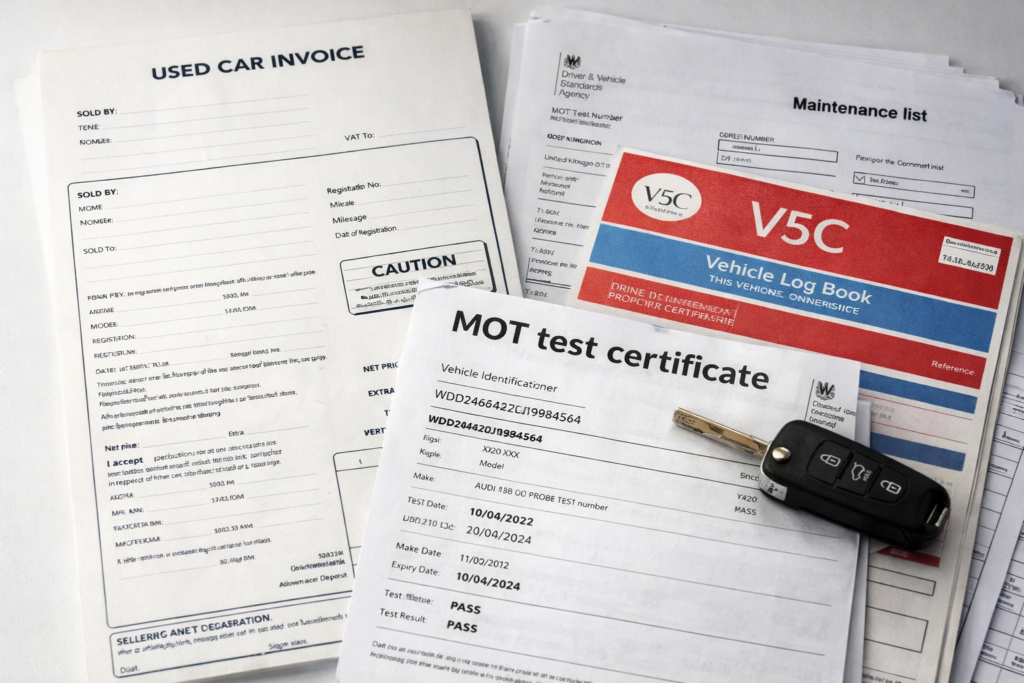
Essential car paperwork should always be checked before you part with any money. Missing or inconsistent documents can signal hidden problems, unpaid finance, or even stolen vehicles. Always cross-check names, addresses, and VIN numbers across every record before buying.
1. V5C Logbook (Registration Certificate)
The V5C logbook confirms the registered keeper of the vehicle — not necessarily the legal owner. It’s a critical document that should always be present and match the car.
- Ensure the VIN/chassis number matches the one stamped on the car.
- Check the seller’s name and address match their ID and the V5C.
- Be cautious if the seller claims the logbook is “in the post” — walk away.
- Only buy with an original V5C — not photocopies or screenshots.
- Look for the latest red-coloured version (post-2019) issued by the DVLA.
2. MOT Certificates and History
Every car over three years old must have a valid MOT certificate. Checking its history can reveal how well the vehicle has been maintained — and whether problems have been ignored.
- Check for advisories or repeated failures — signs of poor upkeep.
- Review gaps between tests which might suggest the car sat unused.
- Ensure mileage readings increase steadily year on year.
- Use the official GOV.UK MOT history checker for accurate records.
- Watch for “repaired” advisories that appear again in later tests.
3. Service and Maintenance Records
A solid service history proves regular maintenance and boosts resale value. Lack of records can mean skipped servicing or hidden faults.
- Look for stamped service books or digital records from garages or main dealers.
- Match invoices to the mileage and date on the odometer.
- Check for major jobs like cambelt, gearbox, or brake replacements.
- Ask the garage to confirm work if invoices look unclear.
- Regular services every 10–12k miles suggest careful ownership.
4. Finance or HPI Check Report
Always perform a vehicle history check before you buy. It confirms whether the car is on finance, stolen, written off, or clocked. Skipping this step can cost you thousands.
- Use trusted providers such as AutoData UK for instant reports.
- Confirm the car is free from finance and not recorded as stolen.
- Check write-off category and mileage records carefully.
- Save or print your full report for insurance and resale proof.
- Never rely on a seller’s verbal assurance — always verify yourself.
5. Receipts, Invoices and Proof of Sale
Once you’re happy with the car, get everything in writing. A simple receipt or bill of sale protects both buyer and seller if issues arise later.
- Include the car’s registration, VIN, mileage, price, and sale date.
- Both parties should sign and keep a copy for their records.
- Ask for VAT invoices if buying from a business or trader.
- Take a photo of the signed receipt before leaving with the car.
- Combine paperwork checks with our guide on vehicle checks and inspection tips .