
Buying a Used Car
A smart used-car purchase starts with a plan. Follow these key steps to budget correctly, choose the right seller, and avoid costly mistakes before you buy.
1. Setting a Realistic Budget
Include total ownership, not just the price on the windscreen. Factor in:
- Insurance: Get quotes using the exact reg — spec and engine change the group.
- Tax & fuel/energy: Check CO₂ band or EV charging cost (home vs public).
- Servicing/repairs: Timing belts, DPF/AdBlue, auto gearbox services, tyres.
- Contingency: Keep a buffer for unexpected repairs in the first year.
Tip:
Budget beyond the purchase price — include insurance, tax, and future maintenance so you’re not caught out by running costs.
2. Choosing Where to Buy
- Dealers: Statutory rights, potential warranty, finance options. Check reviews and include admin fees in the price.
- Private sellers: Often cheaper, but fewer protections — verify ID, address, and match the V5C details.
- Online platforms & auctions: Huge choice; understand delivery/returns and fees. Inspect or get an independent report when possible.
3. Fuel Type & Running Costs
- Petrol: Best for short trips and lower mileages; generally smoother and cheaper to maintain.
- Diesel: Suits high motorway use; check DPF health and local emissions rules.
- Hybrid/EV: Low running costs in town; consider range, charging access and battery health reports.
4. Vehicle History & Condition
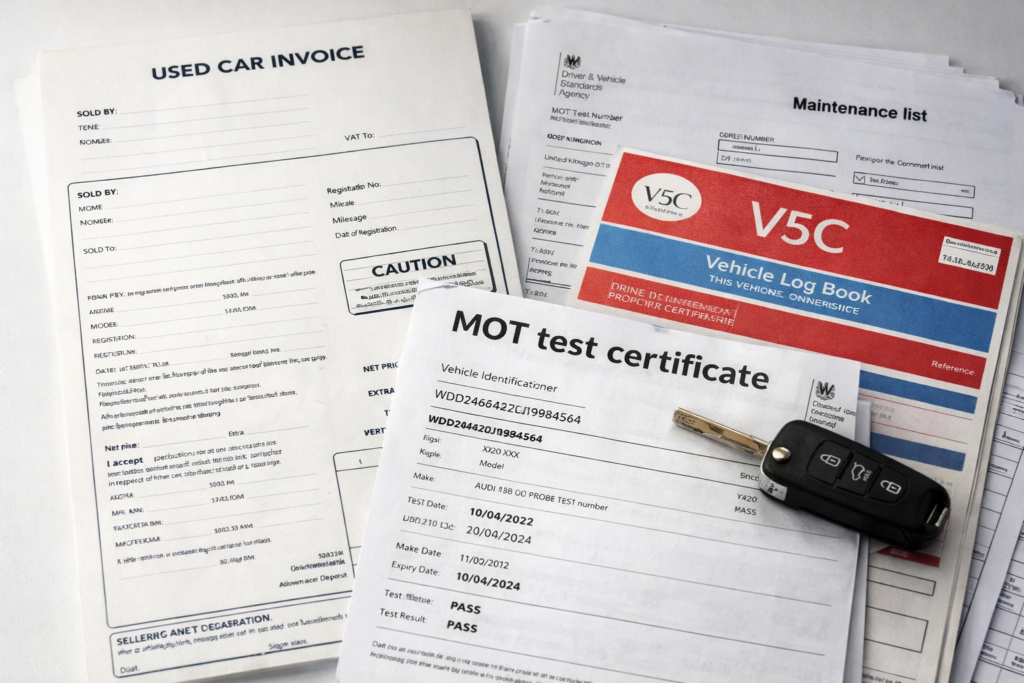
Confirm the story matches the car. Review MOT history, service records and invoices. Use a full history check to uncover finance, write-off, stolen and mileage issues before paying a deposit.
Tip:
Always review the MOT history and run a full vehicle check — it’s the quickest way to spot hidden issues or mileage discrepancies.
You can also verify MOT records via the official
GOV.UK MOT history service
.
5. Avoiding Common Mistakes
- Don’t rush; see the car in daylight and when it’s cold.
- Match VIN, V5C and number plates.
- Avoid cash to unknown sellers; use traceable payment.
- Walk away from pressure tactics or inconsistencies.
For a detailed walkthrough, see our guide on vehicle checks and inspection tips .
6. Making an Informed Decision
Compare your shortlist against real-world prices and condition. If everything checks out, negotiate fairly and confirm terms in writing before leaving a deposit.
Tip:
Bring printed quotes or online comparisons to support your negotiation — it keeps the discussion realistic and can save hundreds.